If you’ve ever wondered how to help students truly understand subtraction, Count On to Subtract First Grade Worksheets are a simple yet powerful solution. Many first graders can add with confidence, but subtraction often slows them down. By showing children how to count on instead of simply “taking away,” you give them a visual, logical bridge between what they already know — addition — and what they’re still mastering — subtraction.
Because the count-on strategy feels familiar, students begin to see patterns, notice relationships, and develop real number sense. As a result, subtraction stops feeling like a brand-new skill and starts making sense in everyday math.
What Is the Count On Strategy?
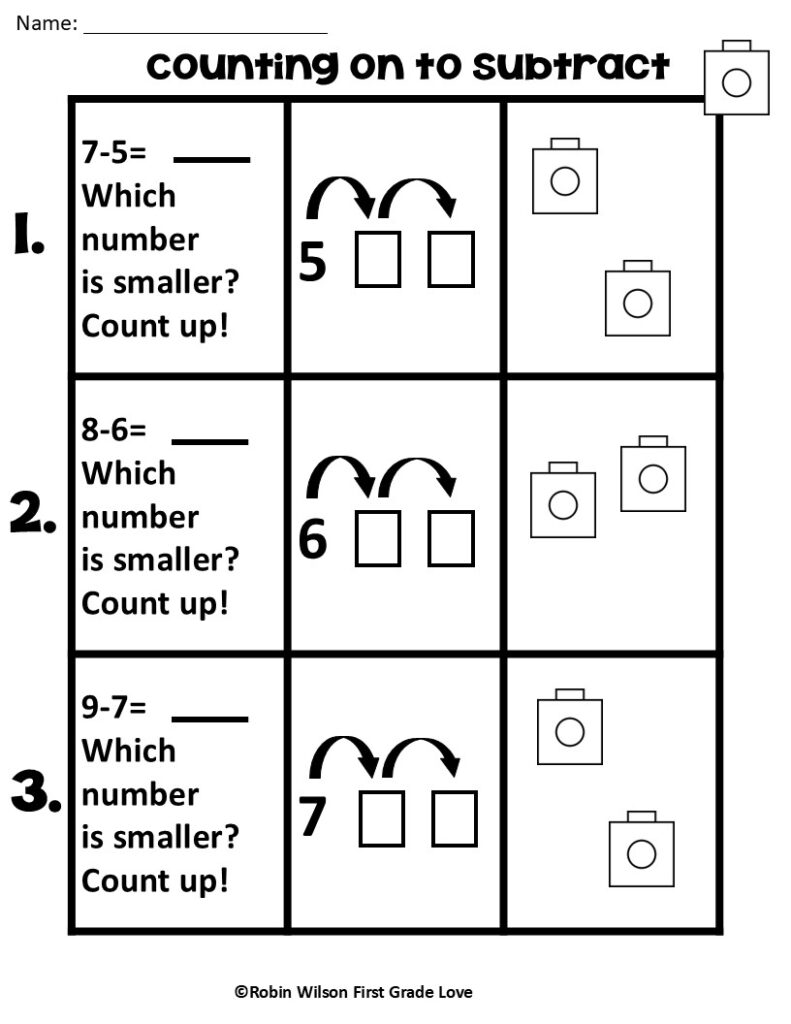
The count-on strategy teaches students to begin with the smaller number and count up until they reach the larger number. For example, to solve 9 – 6, they start at 6 and count 7, 8, 9 — three counts — so the answer is 3. This strategy uses their addition skills to unlock subtraction understanding.
Why It Matters
Because subtraction can feel abstract, counting on allows students to stay grounded in a skill they already trust. Instead of focusing on what’s being taken away, they concentrate on what’s added to reach a total. This mindset shift builds confidence, accuracy, and fluency. Click on this picture for more information or to purchase.
Why the Count On Strategy Works for First Graders
Teaching the count-on strategy helps connect addition and subtraction facts in a tangible way. When learners understand that the two operations are related, they gain speed and accuracy on both sides of the equation. Because they’re already comfortable with addition, they can quickly see subtraction as “finding the missing addend.”
According to teacher feedback from this resource, students who once guessed or counted backward began explaining their thinking clearly. One educator shared, “My students finally understood subtraction once we started counting on!” That kind of progress turns frustration into motivation — and every teacher loves to see that.
How to Teach the Count On Strategy Step by Step
1. Start With Concrete Materials
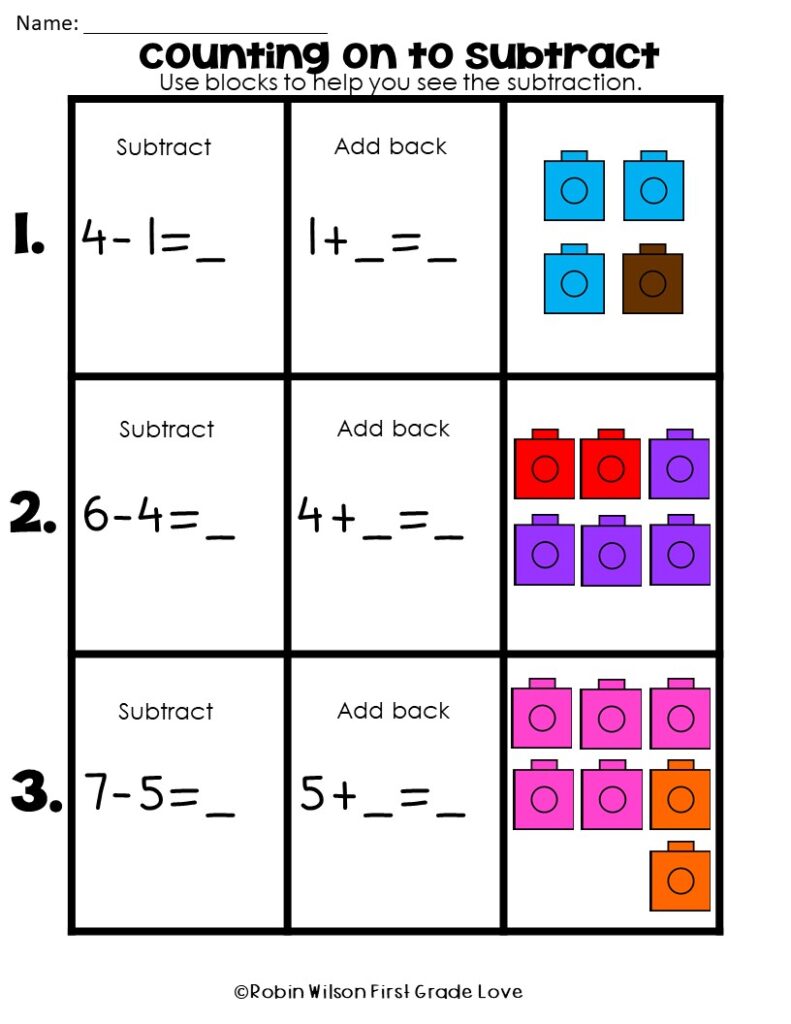
Begin with manipulatives like linking cubes or counters. Show two sets of cubes — the smaller number and the larger — then physically count on to reach the total. As students see and feel the difference, the concept becomes real.
2. Move to Ten Frames and Visual Supports
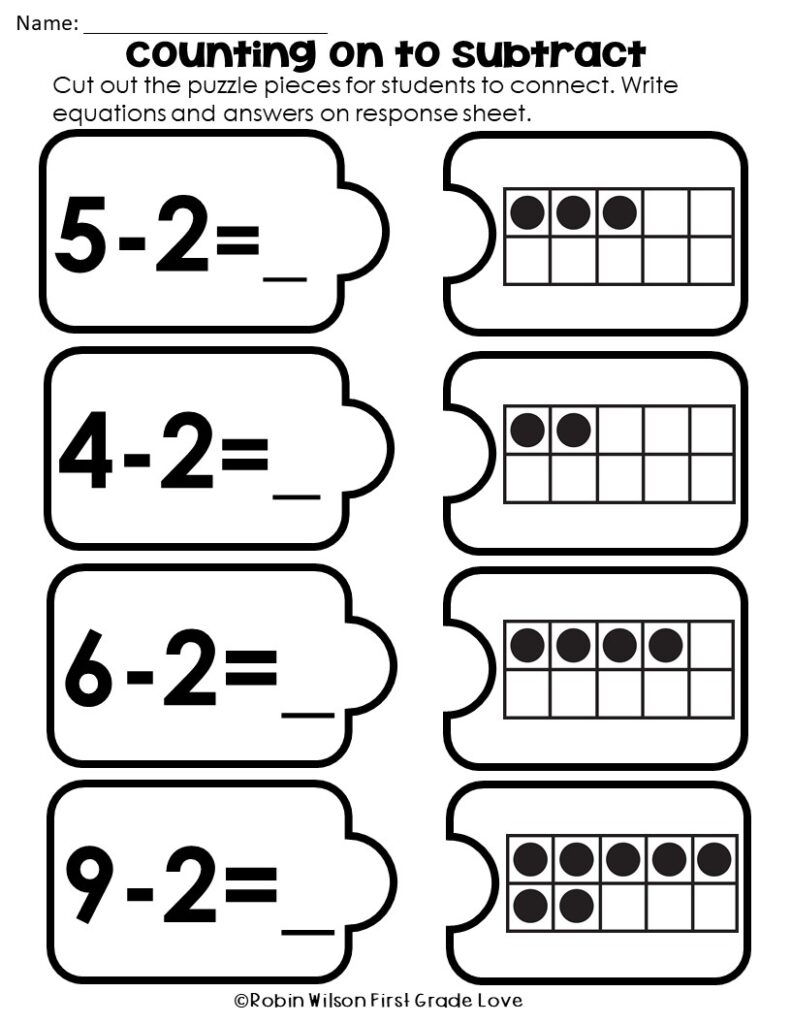
After manipulatives, transition to ten frames. Have students place counters for the smaller number, then add one counter at a time while counting up. Ten frames make it easy to visualize how close they are to the next ten, reinforcing place-value understanding.
3. Add Recording Sheets
Use practice pages where students write the starting number, count on, and record the difference. Because repetition builds fluency, these worksheets help them solidify the pattern.
4. Connect to Real-World Examples
Try math talks like, “If you have 6 pencils and want 9, how many more do you need?” Situational practice keeps learning meaningful and encourages mental math.
Differentiation and Small-Group Ideas
Because not every learner moves at the same pace, this strategy adapts easily. Struggling students can use number lines or manipulatives longer, while advanced learners can move to mental math or missing-addend challenges. You might also use color-coded recording sheets to signal different difficulty levels.
To extend learning, add simple word problems: “There are 5 birds on the fence and 8 in the tree. How many more are in the tree?” Because word problems require both comprehension and reasoning, students see how the strategy applies beyond a worksheet.
Why Teachers Love the Count On Strategy
Teachers across classrooms consistently share how this approach changes the way their students view subtraction. It’s not just another worksheet — it’s a strategy that helps kids think about numbers differently. One review said, “I used this with my small groups, and for the first time, they could explain how they got their answers!” Another teacher noted, “This saved my math block — no more tears over subtraction!”
Because the materials are hands-on and low-prep, teachers appreciate that they can grab and go without spending hours planning. The resource fits easily into any math block, works for interventions, and supports RTI groups. Even better, it gives teachers confidence knowing they’re using a research-based method that really works.
Common Mistakes to Avoid When Teaching Count On
Even great strategies can lose effectiveness if introduced too quickly. Here are a few common pitfalls and how to avoid them:
- Moving to paper too soon: Give students plenty of time with cubes, counters, and visuals before expecting written mastery.
- Skipping discussion time: Encourage students to talk about why the strategy works. Because math talk reinforces learning, it helps concepts stick.
- Not connecting back to addition: Always show how subtraction “undoes” addition — this strengthens fact families and builds automaticity.
- Neglecting small wins: Celebrate progress! Confidence is half the battle in early math success.
By slowing down, modeling clearly, and reinforcing through consistent practice, you’ll see understanding deepen week by week.
Benefits You’ll Notice in the Classroom
Because this strategy builds naturally from addition, you’ll notice confidence rise almost immediately. Students who used to freeze at a subtraction sign suddenly want to explain their thinking. They count aloud together, compare answers, and celebrate small wins. As fluency grows, classroom math talks become richer and more joyful.
You’ll also see better retention across other math concepts. Once learners understand that subtraction and addition are related, future lessons on fact families, missing addends, and even algebraic thinking become smoother. In other words, this one strategy lays a foundation for long-term success.
Try It in Your Classroom
Ready to make subtraction click? You can grab the complete printable set of Count On to Subtract – First Grade Worksheets in my
👉 Count on to Subtract— now on sale for a limited time at $2.95
Prefer to shop on TpT? You can also find it
👉 Count On to Subtract – First Grade on TpT at $4.00.
It includes step-by-step visuals, color and black-line options, ten-frame practice, puzzles, and differentiated pages for small groups. Teachers have described it as “clear, practical, and so easy to prep.”
Count on the Add

Want a Free Sample?
If you’d like to test the strategy before diving in, you can download a free sample pack.
✨ Click here to grab your Count On Strategy Freebie! ✨
Use the pages for morning work, small-group stations, or at-home practice to introduce counting on with confidence. Because once students see that they can solve subtraction through addition, they’re hooked.
Here’s how I suggest using it:
- Introduce the concept in a small group.
- Model counting on with manipulatives.
- Use the free worksheet pages as a guided warm-up or quick check.
- Send one page home for extra practice.
Because the freebie includes the same visuals and layout as the full resource, students will feel familiar when you transition to the complete packet. And once they’ve had success counting on, they’ll be eager for more challenges!
Tips for Review and Reinforcement
- Mix formats: Alternate between worksheets, partner games, and oral math talks.
- Celebrate progress: Track “count-on champions” on a classroom chart.
- Connect to addition: Keep addition fact cards nearby to highlight relationships.
- Use exit tickets: A quick “count-on challenge” at the end of math block helps you see who’s ready to move on.
Because consistent review keeps fluency fresh, a few minutes a day goes a long way toward mastery.
Encourage Lifelong Math Confidence
As teachers, we know the spark that happens when a student says, “Oh, now I get it!” The count-on strategy often creates those moments. It’s visual, hands-on, and gives every learner a way in — especially those who struggle with abstract concepts.
By providing clear tools and gradual steps, you’re helping students build real confidence, one count at a time. And when children believe they can succeed in math, that belief spills over into every subject.
Pin It for Later
Don’t forget to share this idea with other teachers or save it for next year’s subtraction unit.
[PIN IMAGE 4 PLACEHOLDER]
A Final Word of Encouragement
Teaching math is so much more than equations and numbers. It’s about nurturing persistence, curiosity, and joy in learning. When subtraction finally makes sense to a child, you can see confidence bloom right before your eyes.
“Let us not grow weary of doing good, for in due season we will reap, if we do not give up.” — Galatians 6:9
